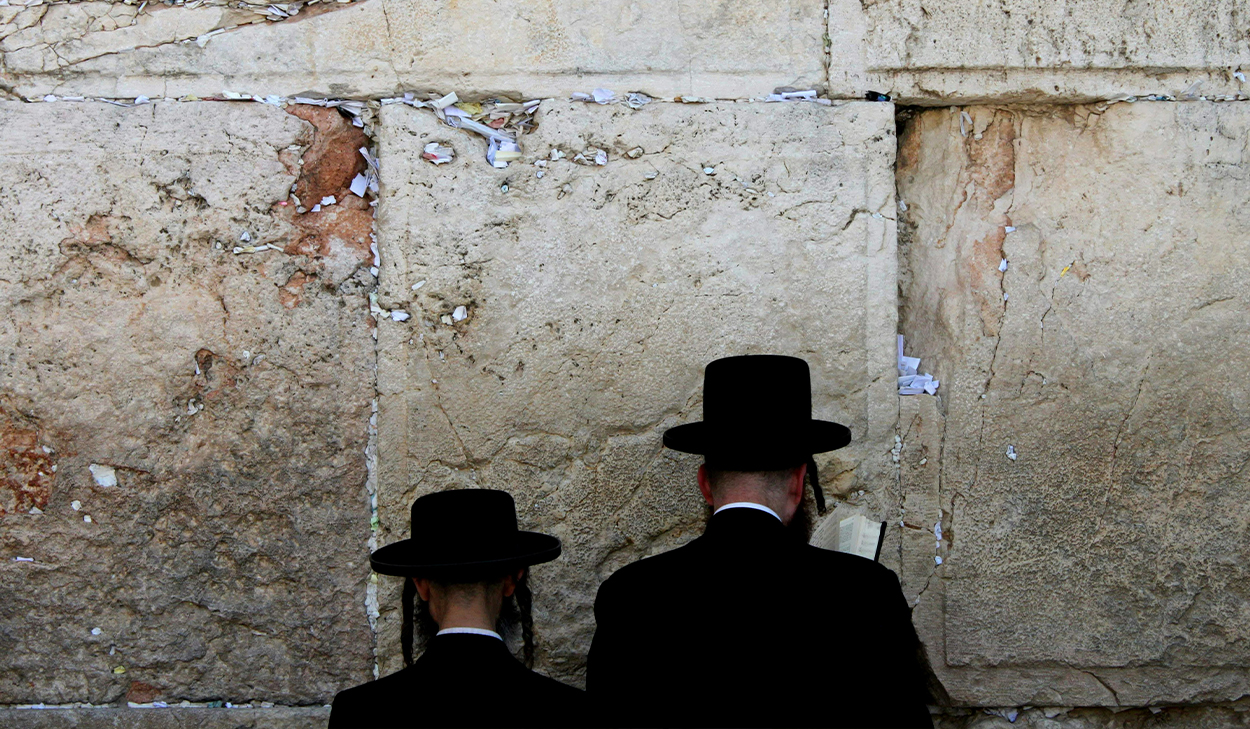

Judaism is a small global religion, but its roots date back thousands of years to Abraham and the Israelites. Learn more about Judaism and how to talk to Jewish friends about Jesus.
Fast Facts
Population: 14.8 million (0.2% of global population)
Growth Rate: The population is expected to increase by 15% by 2060.
Year Founded: Between 2000 B.C. and 1400 B.C.
Founder: Abraham
Holy Books: Tanakh (includes the Torah) and Talmud
Major Branches: Orthodox, Conservative, and Reform
View of Jesus: A good teacher or prophet
Where They Live
Jews are sparsely populated throughout the world. Israel has the greatest concentration of Jews (6.8 million), who account for 77% of the country’s population. The United States has nearly as many Jews as Israel with 5.7 million living within its borders, though Jews only make up 1.7% of the country’s population.
Major Beliefs
Judaism’s roots trace back to God’s covenant with Abraham and the law given to Moses. Jews believe God revealed His will through the Torah. The Torah and the Talmud provide commands and guidance for daily life.
Jews see themselves as God’s chosen people, called to live in holiness and obedience. Jews believe the world is broken, but a Messiah will come to bring restoration.
There are three main branches of Judaism:
Orthodox: This is the most traditional branch and seeks to preserve historical Jewish teaching and practice. Orthodox Jews strictly observe Jewish law, including Sabbath rest and kosher dietary laws. Men and women have distinct religious roles, and synagogue worship typically follows Hebrew liturgy.
Conservative: Conservative Judaism respects Jewish law but allows for adaptation in light of modern circumstances. Conservative Jews believe the Torah is divinely inspired but interpreted through human understanding over time. Services may include both Hebrew and local languages, and men and women often participate equally.
Reform: Reform Judaism, the most liberal branch, focuses on ethical principles over legal observance. While the Torah remains sacred, Reform Jews do not follow it as strictly. Reform congregations often worship in the local language and fully integrate men and women.
Conversation Bridges
Jews and Christians believe in the same Scriptures in the Old Testament. The Tanakh includes the same books in the Old Testament, with the Torah being the first five books of the Bible. But Jews do not believe that Jesus is the Messiah prophesied in Scripture.
Discussing Scripture is a good place to start when having spiritual conversations with Jewish friends. Since Jesus fulfilled the Old Testament prophecies about the Messiah, talk about those Scriptures with your friends and ask if they can think of anyone in history who fulfills those prophecies. A good passage to discuss is Isaiah 53. It is full of Messianic prophecies, and it is often not taught in synagogues.
You can also follow Jesus’ example and ask good questions. Some questions to consider are, “Do you think God is preparing a better world than this one?” and “What’s your perspective on suffering? Do you think God can suffer?”
Read this story of how a Jewish man came to know Jesus.
As you engage in conversations with Jews, pray that Jews will believe that Jesus is the promised Messiah.
A Field Guide to Major World Religions
As followers of Jesus Christ, we are not ashamed of the gospel and its power. Yet we sometimes still find ourselves unsure of how to share our faith as we go about daily lives, especially with people of different religions and worldviews. This guide includes a summary of beliefs from the major world religions, stories of lives changed by Jesus, prayers, and tips for sharing the gospel to help you engage missionally with people from various faith backgrounds. Download your free copy today!