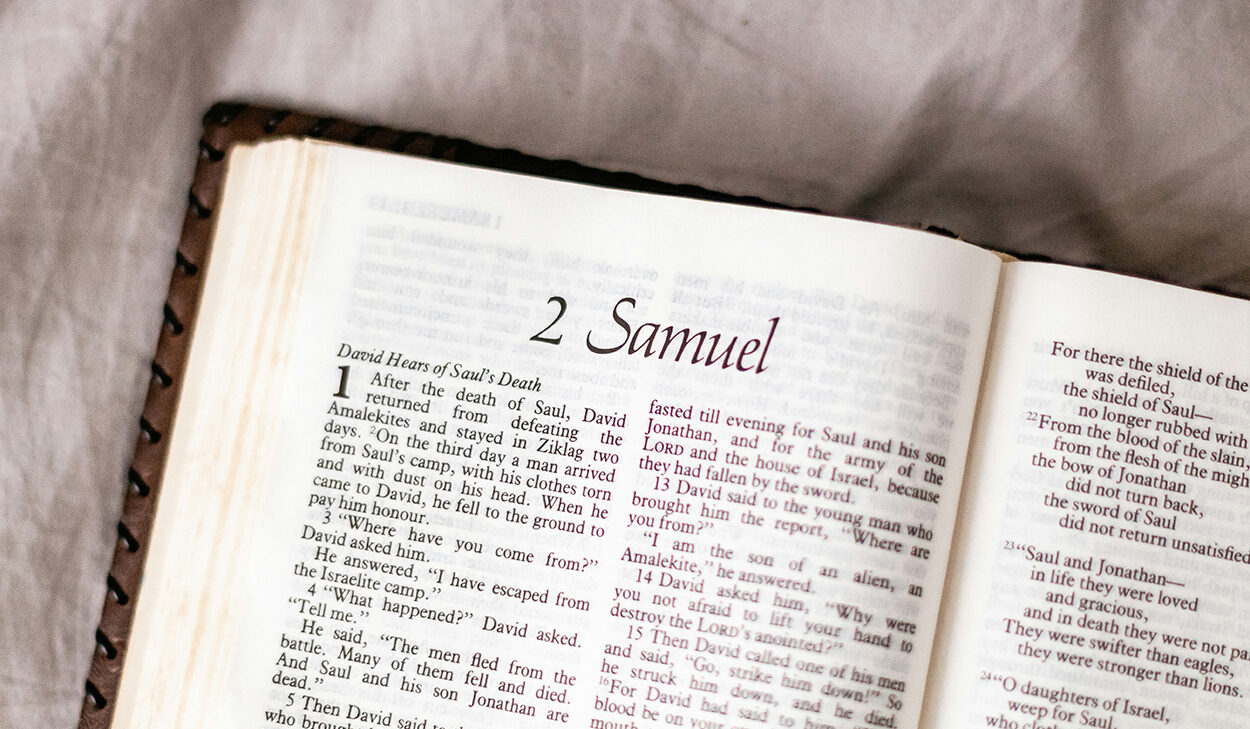

He had fallen asleep at the door of the king’s house. Though the king told him to go home to his wife, this warrior’s morals prevented him from doing such a thing during a military campaign. The king was disappointed and invited his warrior to dine with him. He made sure the warrior was drunk before sending him on his way. But once again, the warrior did not go home. Little did this man know that his wife was pregnant with the king’s child, and his insistence on not seeing her prompted the king to plot his murder.
Uriah’s story is a tragic tale of a once righteous king’s fall from grace and how a mighty warrior paid the price for the monarch’s sin. But it also gives a glimpse into how God’s plan to bless all nations was coming to fruition.
Uriah is not a part of Jesus’ lineage. His name is only mentioned in the Messiah’s genealogy in connection with his wife, Bathsheba—a reminder of how King David slept with an already-married woman and foolishly tried to hide his sin. However, the mention of Uriah’s name in the genealogy does reveal something about Gentiles in the family of God.
You see, Uriah was a Hittite. The Hittites lived in the land of Canaan, part of the land the Lord had promised to the Israelites. They worshiped various gods tied to nature. Because of this, God commanded the Israelites to destroy the Hittites and not intermarry with them, lest the people from this pagan nation lead the Israelites astray (Deuteronomy 7:1-4).
Yet, here was Uriah, a Hittite married to Bathsheba—who was more than likely an Israelite—and one of David’s mighty men (2 Samuel 23:39). His name in Hebrew is understood to mean “Yahweh is my light” or “the Lord is my flame.” This underscores Uriah’s profound devotion to God. Uriah the Hittite seemed to have adopted the Israelite faith and was worthy to the point of being allowed to serve in the king’s army. Even in the early years of kings in Israel, God’s inclusive nature was on display.
Uriah’s character starkly contrasted with David’s in this unfortunate story. Whereas Uriah bravely fought in battle, David stayed away from the battlefield. Whereas Uriah abstained from sexual relations, David indulged in sexual immorality. Whereas Uriah sought to honor the king, David sought to destroy his loyal servant. It goes to show that one does not have to descend from God’s chosen race to be a devoted follower of the Lord. Jesus saw this firsthand during His earthly ministry. Whereas the Messiah often faced rejection from the Jews, He was often met with acceptance from the Gentiles.
Though David’s sin involving Bathsheba and Uriah is a blot on an otherwise nearly spotless record, God was faithful to His promises to this disgraced king. His covenant with David (2 Samuel 7) remained in place, and with time, the Messiah was born from the Davidic line. David’s name is listed in Jesus’ genealogy, and it is placed rather close to the name of Uriah. A Jew and a Gentile—both welcome in the family of God.
East-West Devotionals
Dive deeper into a collection of encouraging stories and devotionals by East-West Founder John Maisel and other authors that will spur you on in gratitude, worship, and obedience.